
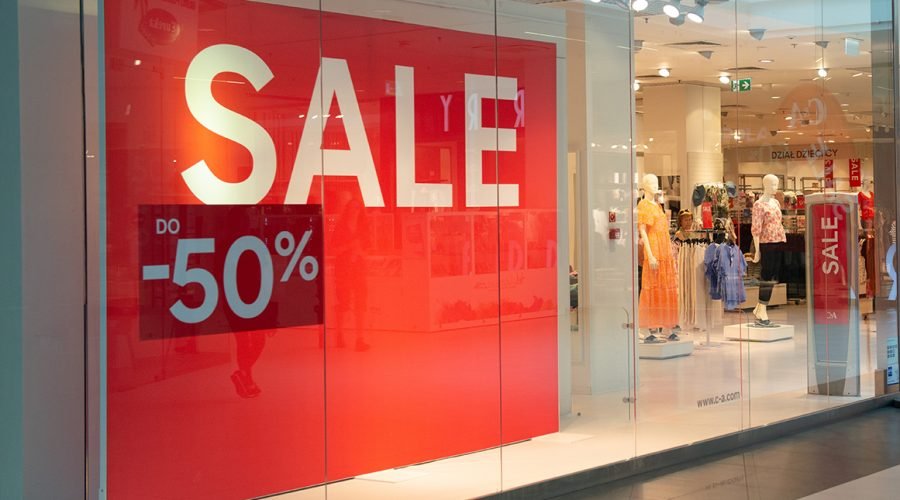
This summer, I’ve seen it everywhere. On the streets of Oslo, on the streets of Nice, and the narrow streets of Italy. There are signs in all colors that practically shine at you with a variety of tempting offers. “-40%” was plastered over a Polo store in France. “-50%” was written in large letters over the window of a Karl Lagerfeld store. “2 for 1” can be found everywhere. If you are a store owner or sell goods in some form, it is naturally tempting to lower the price and lure customers with offers. You want customers to come through the door and choose you, or pick your goods from the store shelf. The truth, however, is that price is a significant part of marketing, and especially discounts and price offers can weaken the brand.
A Cheaper Price and a Weakened Brand
By using discounts and price reductions, you signal something to the market. All your signs that are supposed to attract customers may indeed do just that, but they also do something else. They affect the perception of your brand. In many cases, this perception will be negative. Discounted prices also signal that the product is not worth as much. Price reductions often have a “witch’s hat” effect on your brand, meaning that sales go up for a period but then drop back to normal. At the same time, you have most likely sold your product at a lower price to someone who would have bought it at the regular price anyway.
Set the Right Price
Pricing of goods should start with a good understanding of the price and what price you can charge for the item in your category. This is achieved only through good price research and is not a shortcut where you guess what price to charge. Cost pricing, where you look at the cost of the item and then add profit, is a poor starting point because you may miss the opportunity to charge a higher price than you thought. Good insight into pricing will give you a much greater likelihood of setting the right price from the start. Once you have set the right price for the product or service, there is also little reason to offer discounts. You will always feel pressure from the organization to lower the price and offer discounts, especially if you have a sales team that follows up with customers. These are sales-oriented and focus solely on sales, so it is no wonder they want quick solutions to make a sale. As a marketer or CEO, you must resist the temptation to agree to this and instead think about what it does to the brand.
Don’t Think Number of Purchases, Think Profit
Too many marketers think only of the number of purchases and the top line. What should be thought of more often is what discounts do to the company’s bottom line. Discounts will naturally affect the bottom line negatively, both in the short term because you sell the goods at a discounted price, and in the long term because it is likely to weaken the brand. Considering market penetration, which is often lower than believed because regular buyers secure the product at a discounted price, there are substantial reasons to be very cautious with price reductions.
Remember the 4 P’s
Price has always been part of the 4 P’s that are in the toolbox of a CMO or someone responsible for marketing in the organization. It is therefore important that this is also part of the marketer’s role. And it is important that marketers have competence in pricing. Not just pricing, but also how price is communicated in the market. Done correctly, it will be an extremely effective tool for ensuring a strong brand and a good bottom line. But done wrong, the organization can quickly notice lower earnings and challenges with consumer perception of the brand.
A concrete example is from my trip to Italy where I was inside a clothing store that communicated discount signs on almost all shelves. A Swedish girl and her mother came in, and the girl said, “Mom, this looks fake,” and they left as quickly as they came in. I don’t think the discounts helped that impression.