
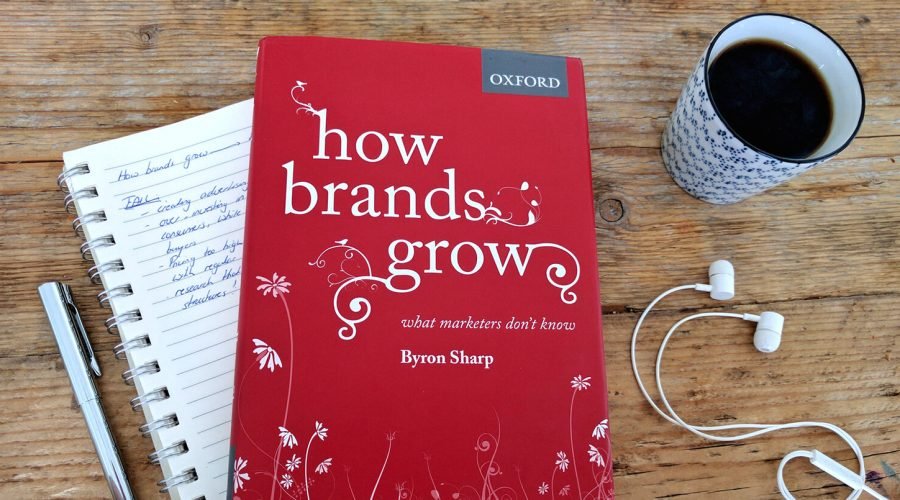
“How Brands Grow: What Marketers Don’t Know” by Byron Sharp was published in 2010. “How Brands Grow: Part 2,” co-written with Jenni Romaniuk, was released in 2015. These books challenge conventional marketing theories by presenting evidence-based laws on how brands grow. Some of the key theories presented are the importance of penetration over brand loyalty and how distinctiveness and mental availability contribute to building strong brands. There is no doubt that these have been influential books that have improved how many people approach marketing. At the same time, it seems that many view Byron Sharp and the Ehrenberg-Bass Institute as the only truth, forgetting that there are other institutes, professors, books, and voices in the debate on marketing theory.
Where Have All the Heroes Gone?
Before Byron Sharp, the biggest voice and hero in marketing was likely Philip Kotler. Kotler talked more about segmentation, positioning, the use of the 4 Ps, customer loyalty, and customer service. Byron Sharp, on the other hand, is critical of excessive segmentation and customer loyalty. In several areas, Byron Sharp is likely correct. For instance, regarding customer loyalty, cases from ANFO Effekt here in Norway show that prioritizing penetration yields far better results than those focusing on customer loyalty. However, it seems that Kotler and several others are being completely dismissed, and for many, Sharp and the Ehrenberg-Bass Institute represent the only truth. It is important not to forget that Kotler and others also have many other theories and aspects of marketing they focus on, which are very important, such as customer service.
Right or Wrong?
With Byron Sharp, who is also quite sharp in his criticism of dissenters, it can seem as though we now only have theories from the Ehrenberg-Bass Institute to rely on. However, there are also several opposing voices. One example is Professor Mark Ritson. He has worked both as an academic and as a consultant for several of the world’s leading companies. He is highly critical of how many slavishly follow Byron Sharp’s theories and believes there is room to consider multiple ideas simultaneously. He supports what he calls the bothism principle and believes, for example, that it is right to segment more than Byron Sharp recommends. He encourages using theories from both Byron Sharp and several other thinkers, both within marketing and also other disciplines.
The Final Verdict
As in a court case, things are not always black and white. The same applies to Byron Sharp and the Ehrenberg-Bass Institute. These are undoubtedly very important theories that marketers must be familiar with, but it is also crucial to stay updated on other theories and opinions and see them in context. Therefore, the final verdict in this article is that one must consider all parties and not give one side complete right in everything.